
Mazda RX-7 FD3SWhere these are registered worldwide · drag to pan, scroll to zoom · open the full map →
|
How to read an FD, and the number that lies
Everyone talks about the FD in “Series 6, 7 and 8,” the enthusiast shorthand for the three phases of its life: Series 6 (1991 to 1995), Series 7 (1996 to 1998) and Series 8 (1999 to 2002). Mazda never actually badged them that way, so do not expect to find it on the car. The power climbed with each phase, 255 PS then 265 then the famous 280 on the last cars. But here is the trap: not every Series 8 makes 280. Only the manual sporting grades do. The base Type RB makes 265, and every automatic FD, in any series, is stuck at 255. If someone swears their auto FD is a 280, they are wrong.
The engine that makes it an FD
Under that long bonnet sits the 13B-REW, a twin-rotor Wankel with the world's first mass-production sequential twin-turbo setup: one small turbo spools early, a second kicks in up top. It is a 1.3-litre only in the odd way rotaries are measured (two 654cc chambers), it revs to the moon, and it sounds like nothing else on earth. It is also the source of every FD headache, which we will get to.
The range, series by series
Series 6 (1991 to 1995): the original, and the only one sold new abroad
255 PS, and the purest early shape. Every US, UK, European and Australian FD is a Series 6, because Mazda pulled the car from those markets after 1995 (America got just three model years of it). So outside Japan, if a car is not an import, it is one of these.
Series 7 (1996 to 1998): the mid-life clean-up
A simpler vacuum manifold, a smarter 16-bit ECU and a bump to 265 PS, plus revised tail lights and bigger wheels on the sportier grades. Quietly the most improved-per-yen the FD ever got.
Series 8 (1999 to 2002): the best of them, and Japan-only
More efficient turbos, a bigger intercooler and bigger brakes, the 280 PS peak, and the run-out specials everyone now wants. Never officially left Japan, so every Series 8 abroad is an import.
The grades, from sensible to serious
The Type R is the core enthusiast manual, the one most people mean by “an FD.” Above it, the Type RS and Type RZ are the lightweights: Bilstein dampers, 17-inch wheels, a shorter final drive, Recaros in the RZ, and a good chunk of weight stripped out (the RZ is the hardest-core, in tiny numbered runs). The Type RB is the value grade, a 265 PS car in Series 8 rather than the full 280. And the Touring X is the softer GT, the one you find with the four-speed automatic. Want a rotary you can daily? A Touring X or RB makes sense. Want the sharp one? Chase a Type R or RS.
The Spirit R: the send-off
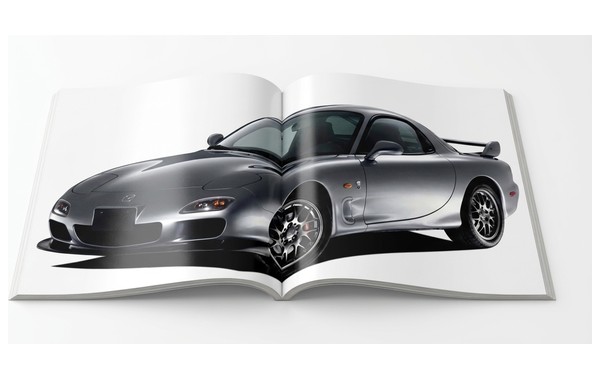
When Mazda finally killed the FD in 2002 it did it properly, with the Spirit R. There are three: the Type A is the halo, a two-seater with a five-speed, the full 280 PS, red Recaros and gunmetal BBS wheels; the Type B is a five-speed 2+2; and the Type C is a 2+2 automatic that drops back to 255 PS. Around 1,500 were built, and here is the fact people get wrong: they were not all Type A. The split is roughly 1,044 Type A, 420 Type B and 40 Type C, so the automatic Type C is the genuinely rare one. Every Spirit R wears a numbered plaque, and a clean Type A is the blue-chip FD now.
Buying one: it is all about the engine
The rotary is glorious and fragile in equal measure, and the single most important thing you can do is a warm compression test on a proper rotary tester before you buy. Healthy is around 6.5 to 7.5 on each face; anything under 6 means a rebuild, and a rotary rebuild is not cheap. Worn apex seals are the classic killer, and they get killed early by overheating, detonation and skipped maintenance, not by the design itself. The other FD bogeyman is the “rat's nest,” the maze of vacuum hoses and solenoids that run the sequential turbos; when they age they all fail together, which turns one problem into what looks like five. Budget for a cooling and vacuum refresh in the first year no matter how good the car looks, walk away from an unknown tune sitting on old hoses, and buy the most documented, unmodified car you can find.
So which FD do you actually want?
For most people the answer is a clean, honest Series 8 Type R or RS: the most developed version, the full 280, and the sharp lightweight feel the FD is famous for. A Series 6 has the purity, and it is the only way to own a factory export or left-hand-drive car. And if the budget is there, a Spirit R Type A is the one to keep forever. Whatever you buy, buy the compression figures and the service history first and the paint second. A tired rotary will cost you far more than a scruffy shell ever will.
VIN Table
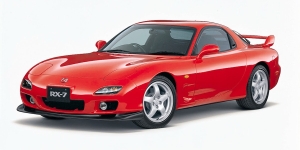 |
| Mazda RX-7 Series 8 VIN Table |
| 13270 Built |
| RX-7 Series 8 Production Numbers VIN Ranges |
Special Models
 |
 |
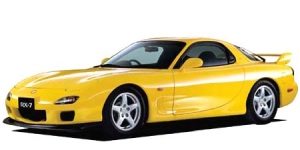 |
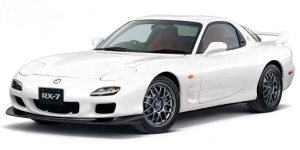
| Spirit-R | Type RZ | Type R Bathurst |
| 1504 Built 1044 Type A 420 Type B 40 Type C Mazda RX-7 Spirit-R Exterior Images Mazda RX-7 Spirit-R Interior Images Press Release and Info |
325 Built Mazda RX-7 Type RZ Images |
2824 Built (Series 8 only) 650 Type R Bathurst R 2174 Type R Bathurst Mazda RX-7 Type R Bathurst Images |