Mitsubishi Lancer Evolution Evo I to XWhere these are registered worldwide · drag to pan, scroll to zoom · open the full map →
|
How to read the Evo range
Two things unlock it. First, the chassis code shares generations: CD9A is the Evo I, but CE9A covers both the II and the III, CN9A is the IV, and CP9A covers the V, the VI and the Tommi Makinen. From there CT9A covers the VII, VIII and IX together, and only the Evo X gets its own code, CZ4A. Second, and this is the big one: the Evo X is not a 4G63. Every Evo from the I to the IX used the legendary iron-block 4G63 turbo. The X threw it out for an all-new aluminium engine, the 4B11. If the 4G63 is what you came for, you want a IX or earlier.
GSR or RS? Get this right first
Every Evo came in two flavours, and it is the single most important thing to understand before you buy. The GSR is the fully-equipped road car: Recaros, air-con, ABS, and from the Evo IV the clever AYC torque-vectoring rear diff. The RS is the stripped homologation special: no ABS, steel wheels, wind-up windows, a close-ratio box, mechanical diffs and about 70 kilos less weight. Do not read “RS” as the cheap one. It is the purpose-built rally base, it is usually the rarer car, and for a lot of builders it is the better one.
The range, generation by generation
Evo I to III (1992 to 1996): the first shape
The 4G63 climbed in steps, 250, 260 then 270 PS, so no, the early Evos did not all make the famous 280. These are the collectible originals, and the III (bigger turbo, real aero) is the enthusiast value pick of the early cars.
Evo IV to VI (1996 to 2001): the cap, and the wide body
The IV brought the AYC diff and a twin-scroll turbo and pinned the power at the 280 PS ceiling it would hold for years. The V flared the arches out to the famous wide body, with Brembos and 17-inch wheels. The VI refined it with better cooling and a titanium-alloy turbine. And then there is the crown, the Tommi Makinen, below.
Evo VII to IX (2001 to 2007): the last of the 4G63
All three share the CT9A code. The VIII introduced the MR version, with its aluminium roof and six-speed gearbox. The IX added MIVEC variable valve timing and is widely reckoned the sweet spot, the most sorted iron-block Evo there is. There was even a JDM-only Evo IX Wagon (the manual one is a six-speed, the automatic a five).
Evo X (2007 to 2016): the new engine, and the end
All-new aluminium 4B11, and a split personality: the GSR is a five-speed manual, the MR a six-speed twin-clutch SST (an automated dual-clutch, not a manual and not a normal automatic). It ran to 2016, signed off by the 2015 Final Edition, and Mitsubishi has not built an Evo since.
The Tommi Makinen Edition: the crown
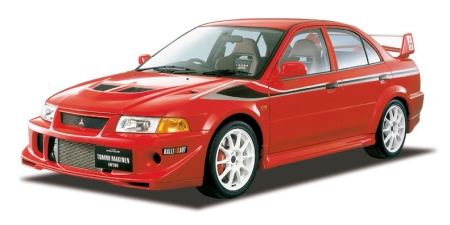
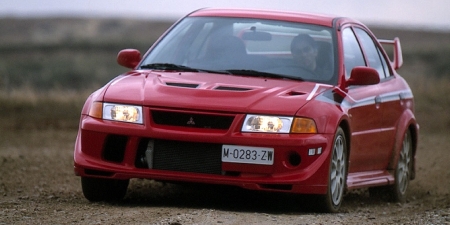
The 1999 to 2001 TME is a factory hot-rod of the Evo VI, nicknamed the “Evo 6.5,” built to honour Tommi Makinen's four straight WRC drivers' titles. It kept the 280 PS badge but got a quicker-spooling titanium turbo, lowered and retuned suspension, a faster steering rack, red Recaros and white Enkeis. How many were built is genuinely murky: the folklore figure is around 2,500, but chassis registries (and our own build data below) point closer to 4,000.
So which Evo do you actually want?
For the pure iron-block experience, the Evo IX is where most people land: the last and best-developed 4G63, with MIVEC. Want it raw? An RS strips the weight out. Want to actually live with it? A GSR keeps the comforts and the AYC. The wide-body V and VI are the ones that look the part, and the Tommi Makinen is the collector's crown. Whatever you chase, the 4G63 is famously tough, so the enemy is not the engine, it is the last owner: check the AYC and ACD systems work, demand the timing-belt history, and walk away from an over-boosted, hard-launched car no matter how cheap it looks.
The Tommi Makinen Edition Registry
Japan |
Europe + UK |
 |
 |
| Tommi Makinen GSR 2987 Built Japan RHD |
Tommi Makinen RS 621 Built Europe LHD 99 Built UK RHD |